
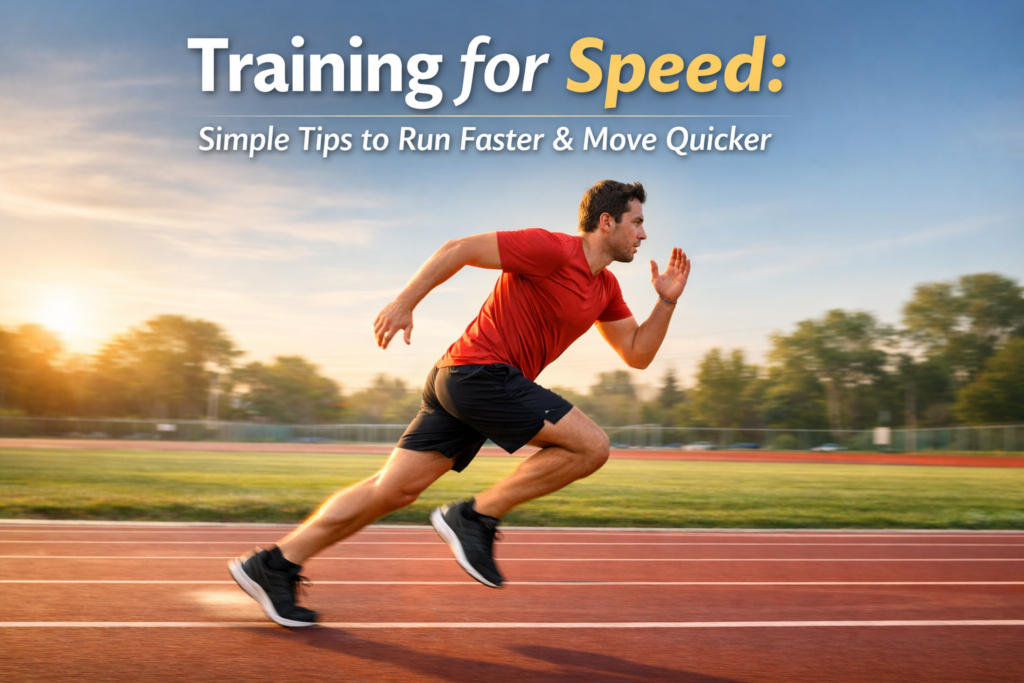
Why Training for Speed Is Easier Than You Think.
Most people think speed is something you are born with. Either you are fast, or you are not. After working with hundreds of beginners over the years, I can say this with confidence: that idea is wrong. Speed is a skill. And skills can be trained.
Training for speed simply means teaching your body to move faster, more smoothly, and with better control. It is not only for athletes or runners. It helps busy business owners keep energy high. It helps entrepreneurs stay sharp. It even helps people who just want to feel less stiff when chasing a bus or climbing stairs.
I once helped a small logistics founder in a quiet coastal town near Setúbal. He did not want to “run races.” He just wanted to stop feeling slow during weekend football games. Six weeks of simple speed exercises later, his exact words were, “I feel ten years younger. Also, my knees stopped complaining.” That result is common.
In this guide, you will learn what training for speed really means, how speed exercises work, and how interval training for speed fits in. You will also see how training for speed agility improves balance and reaction time together, not separately.
What Is Training for Speed?
Training for speed is exactly what it sounds like. It is exercise that teaches your body to move faster on purpose. That could mean running quicker, changing direction faster, or reacting sooner when something unexpected happens.
Unlike steady cardio, which focuses on how long you can move, speed training focuses on how fast you can move for short bursts. Unlike strength training, which builds force, speed training teaches your muscles to use that force quickly.
Think of it like this. Strength is how hard you can push a door. Speed is how fast you can open it when someone knocks.
This type of training works for almost everyone. Competitive athletes use it to shave seconds off performance. Weekend runners use it to feel lighter on their feet. Office workers use it to improve coordination and energy. Even beginners benefit because speed training improves how the brain talks to the muscles.
Here is the simple science part, without the headache. Your body has fast muscle fibers and slow ones. Speed exercises wake up the fast ones. They are often asleep from sitting too much. When you train them, movement becomes smoother and quicker.
That is why even basic speed exercises feel hard at first but powerful later. Training for speed is not magic. It is muscle education.

Why You Should Start Speed Training
Speed training gives benefits far beyond running fast. Over the years, I have seen it quietly fix problems people did not know they had.
Better Athletic Performance
Speed improves almost every sport. Faster sprints help runners. Faster first steps help football and basketball players. Quicker reaction time helps racket sports.
One client I worked with ran a small printing firm in Cluj-Napoca. He trained twice a week using basic training for speed agility drills. After one month, he told me his weekend tennis group accused him of “secret coaching.” He laughed, but his footwork had clearly changed.
Speed plus agility means you move fast and stop safely. That combination matters.
Injury Prevention
This surprises many people. Moving faster can actually protect you.
Speed training strengthens muscles and teaches joints to absorb force correctly. When your body knows how to react quickly, it avoids awkward positions that cause injury.
A 2025 review from the European Journal of Applied Physiology showed that controlled sprint training reduced lower-body injury risk by improving neuromuscular coordination. That is a fancy way of saying your body learns control under pressure.
More Calories Burned
Short bursts burn more energy than slow, steady work. Interval training for speed raises heart rate fast and keeps it high.
I once tracked data for a retail owner from Ajman. His 20-minute speed session burned more calories than his usual 45-minute jog. He stopped jogging after that. Time matters.
Boosts Overall Fitness
Speed training improves heart health, muscle strength, and coordination together. You do not train one thing. You train the system.
That is efficiency. And efficiency wins.
Simple Speed Exercises to Start With
This is where beginners usually overthink things. You do not need fancy tools. You need clear movement and good rest.
Sprints
Sprints are short, fast runs. They are the foundation of training for speed.
Start with 30 to 50 meters. Run fast, not sloppy. Walk back slowly. That is one rep.
Beginners should do 3 to 5 sprints. Rest more than you think you need. Speed comes from quality, not exhaustion.
I once coached a founder from Braga who tried ten sprints on day one. He texted me three days later asking if stairs were optional in life. Learn from him.
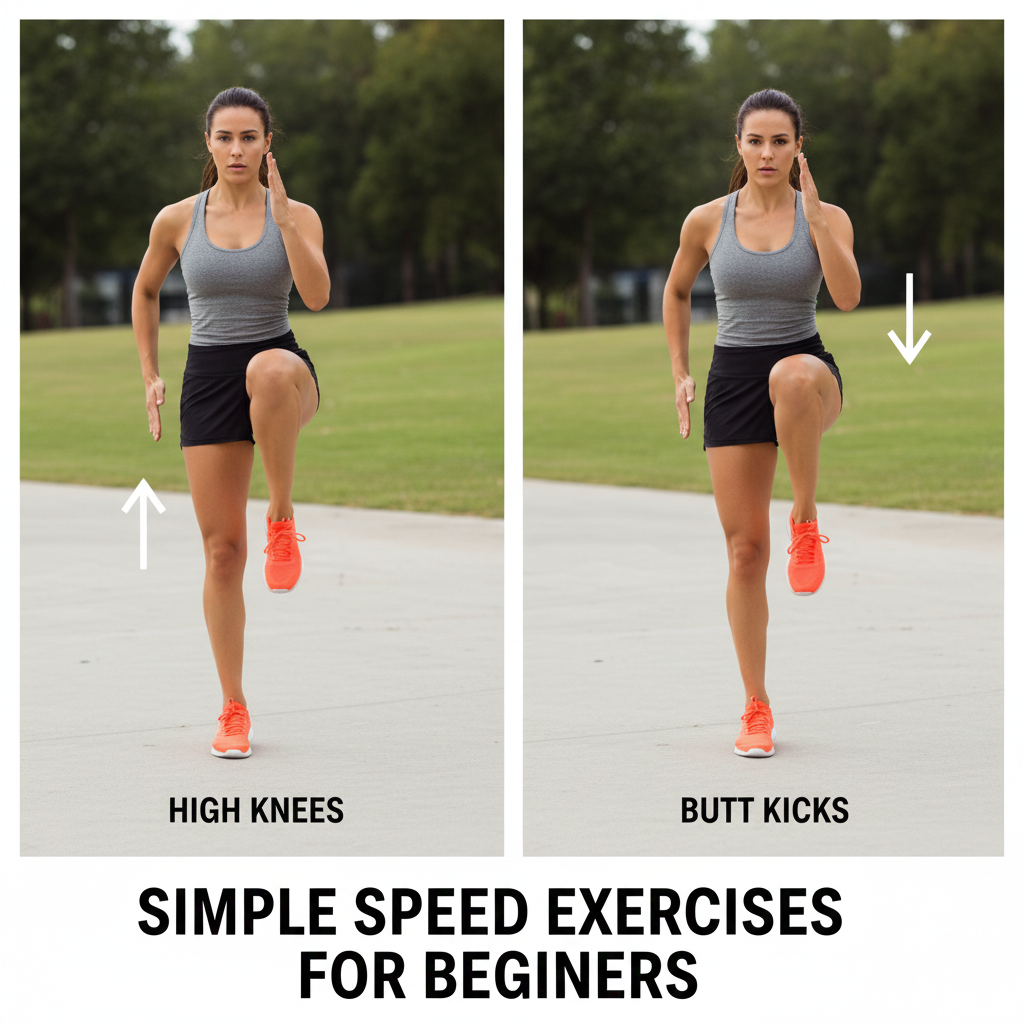
High Knees
Stand tall. Drive knees up quickly. Pump arms.
Do this for 20 seconds. Rest. Repeat.
High knees train rhythm and hip speed. They look simple. They work deeply.
Butt Kicks
Kick heels toward glutes while running in place.
This drill improves leg recovery speed. It helps runners stop overstriding, which is a common beginner mistake.
Lateral Shuffles
Move side to side quickly while staying low.
This drill is gold for training for speed agility. It teaches control during direction changes.
A-Skips and B-Skips
These drills look awkward at first. Everyone feels silly. That is normal.
They train coordination between arms and legs. Most beginners skip them. The smart ones do not.
Hill Sprints
Find a gentle hill. Sprint up. Walk down.
Hills build power safely. Gravity limits speed naturally.
Quick Tip
Start slow. Pick two or three speed exercises per session. Leave energy in the tank.
FAQs About Training for Speed
How long until I see results?
Most people notice improvements in 4 to 6 weeks with consistent training. You’ll feel faster and more explosive. Your measured sprint times will drop. Stick with the program.
Can I do speed training every day?
No. Speed training is extremely demanding on your nervous system and muscles. Your body needs 48 to 72 hours to recover fully between sessions. Training daily leads to overtraining, fatigue, decreased performance, and injury. Stick to 2 to 3 sessions weekly.
Do I need special equipment?
Not really. Good running shoes are essential. A stopwatch or smartphone timer helps track intervals. Everything else (cones, agility ladder, resistance bands) is nice to have but not required. You can use water bottles, shoes, or rocks as markers.
Is interval training running better than steady cardio for speed?
Yes, for speed-specific goals. Steady cardio builds aerobic endurance, which is valuable for long-distance performance. But if your goal is to get faster, interval training for speed is superior. Short, intense bursts train fast-twitch muscle fibers and improve your body’s ability to produce power quickly.
What’s the difference between speed and agility training?
Speed is straight-line quickness. How fast can you run from point A to point B? Agility is your ability to change direction quickly while maintaining speed and balance. Both matter. Training for speed agility develops both qualities for complete athleticism.
