
You know that stubborn fat around your belly? The one that won’t budge even when you’re shedding pounds everywhere else? Here’s the thing- belly fat is not just about looking good in your jeans. According to recent 2025 research, excess belly fat is ” a marker for everything- insulin resistance, elevated cardiovascular risk, fatty liver and type 2 diabetes- all very bad outcomes that limit a long and healthy life.”
But here’s some encouraging news: your treadmill might be exactly what you need.
Let me tell you about Sarah, my neighbor. She tried every diet trend imaginable. Keto, paleo, intermittent fasting- nothing stuck long-term. Then she dusted off her basement treadmill and started walking 30 minutes daily. Six months later? She’d lost 3 inches from her waist. No fancy equipment. No complicated routines. Just consistent treadmill walking.
Why Your Belly Fat Is So Stubborn
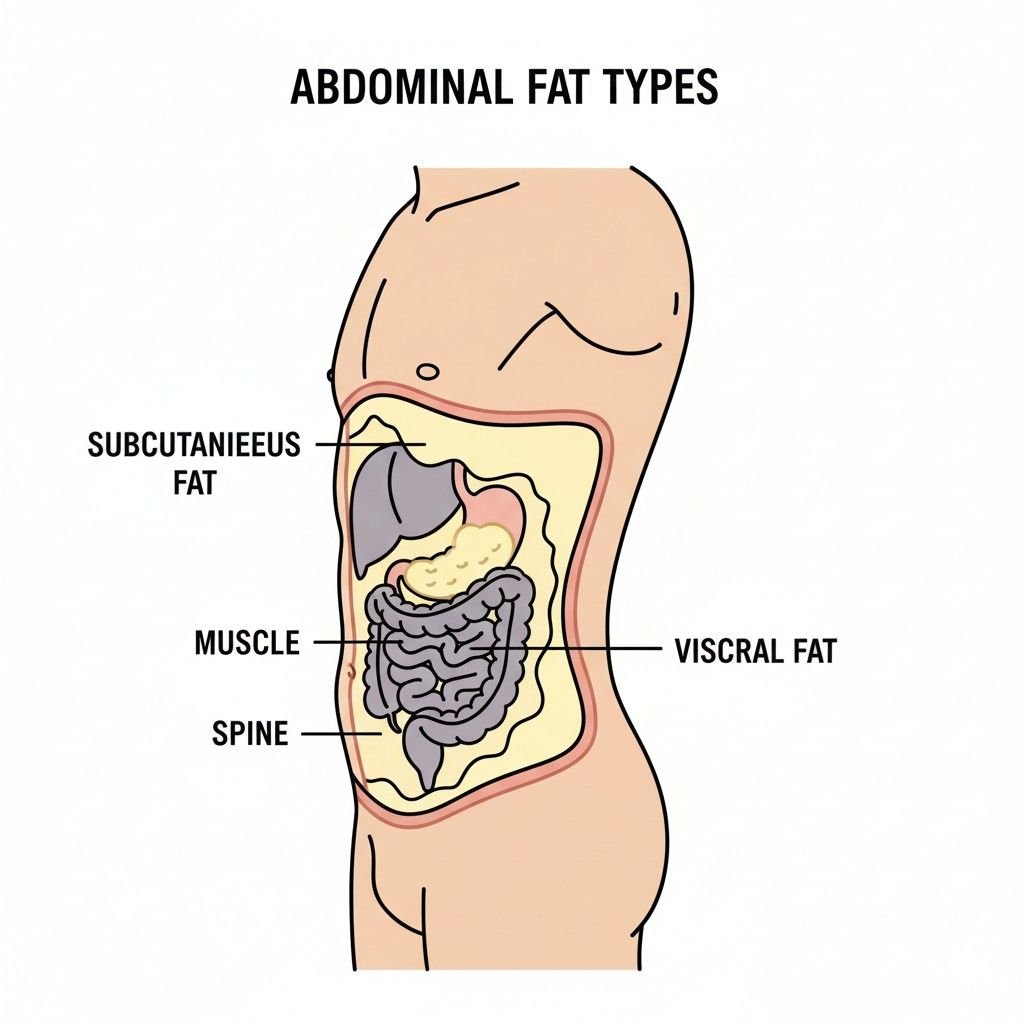
When doctors talk about belly fat, they’re actually referring to two different types. There’s subcutaneous fat– the soft layer you can pinch just under your skin. And then there’s visceral fat– a deeper, invisible layer that wraps around your internal organs like bubble wrap.
That visceral fat? That’s the real troublemaker. A 2025 meta-analysis published in ScienceDirect involving over 824,000 participants found that high visceral fat increased cardiovascular disease risk by 55%, stroke risk by 45%, and cardiovascular death risk by 38%. Even more concerning, new research from December 2025 reveals that belly fat is linked to harmful heart muscle thickening, especially in men.
Your belly stores fat differently than your arms or legs. It’s often the first place fat accumulates and the absolute last place it leaves. Why? Pure biology. Your body sees belly fat as an emergency energy reserve and protects it stubbornly.
The Truth About Spot Reduction (Sorry, It Doesn't Work)
Let me be straight with you: those “target your belly fat” promises you see online? Complete marketing hype.
You can’t pick and choose where your body burns fat. It’s like trying to drain water from just one corner of a swimming pool- the whole water level drops together, not just one section.
The treadmill won’t magically melt belly fat while leaving everything else alone. But here’s what it will do: create a calorie deficit that forces your body to tap into stored fat for energy. Eventually, that includes your stubborn belly fat.
Walking on a Treadmill: Simple but Incredibly Powerful
Can walking really make a difference? Absolutely, and science backs this up.
Updated research from Healthline (April 2025) confirms that walking helps you lose weight and belly fat. What makes it even better? Walking is sustainable. You can walk today, tomorrow, and ten years from now. Compare that to brutal workout routines that leave people burnt out within weeks.
The 30-minute sweet spot: According to research from Harvard Health, engaging in at least 30 minutes of moderate-intensity activity – like brisk walking at 3 to 4 mph – most days can significantly reduce belly fat over time. That’s a pace where you can talk but can’t easily sing along to your favorite song.
The benefits of treadmill walking extend far beyond calories burned. It reduces stress (which lowers cortisol, a hormone directly linked to belly fat storage), improves insulin sensitivity, and keeps your metabolism elevated for hours after you step off.
Incline Walking: Your Secret Weapon
Here’s where things get really interesting.
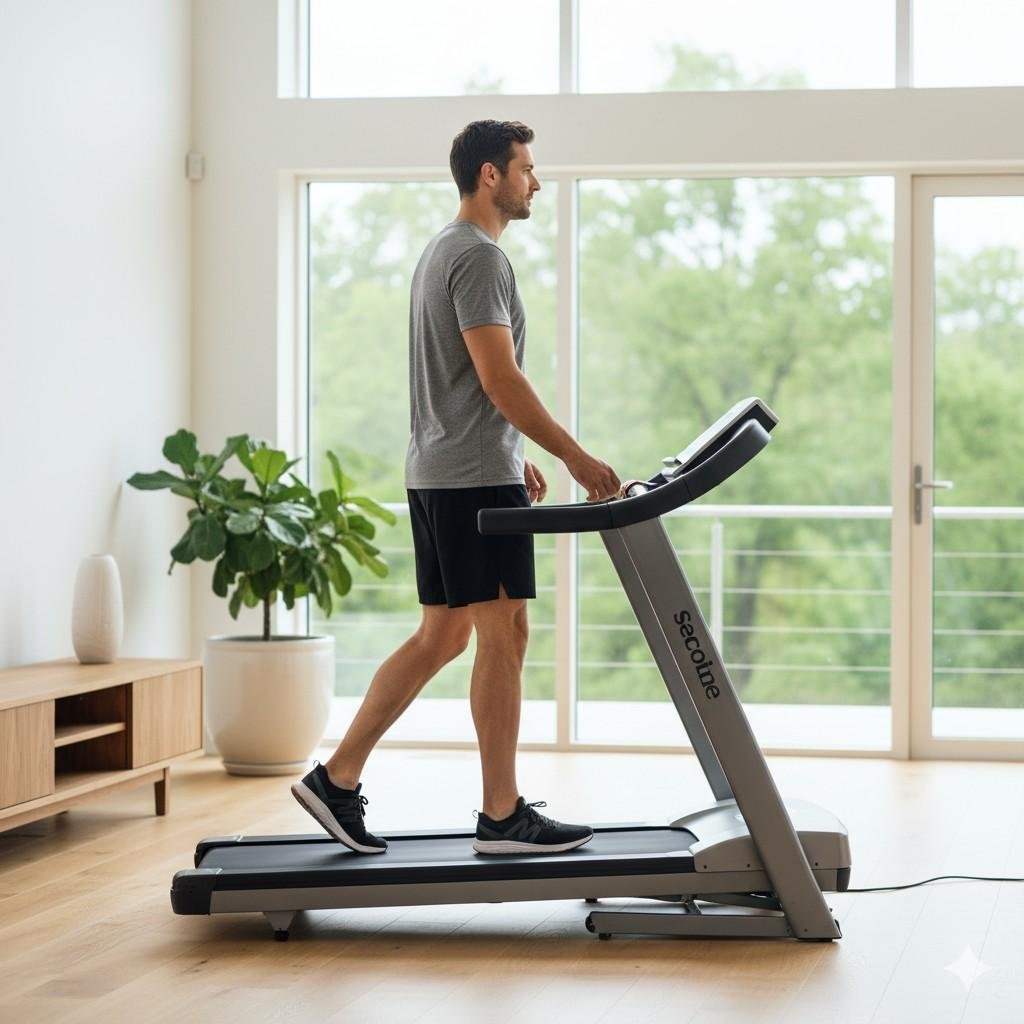
Walking on a flat treadmill burns calories. Walking on an incline? That’s a completely different game.
When you increase that incline, your glutes, hamstrings, and- here’s the kicker- your core muscles work overtime to stabilize your body.
Research shows you’re burning 50-60% more calories at just a 5% incline compared to flat walking at the same speed.
When you increase that incline, your glutes, hamstrings, and- here’s the kicker- your core muscles work overtime to stabilize your body. Research shows you’re burning 50-60% more calories at just a 5% incline compared to flat walking at the same speed.
I watched my gym buddy John make this exact switch. Same 30 minutes. Same speed. He just added incline. Within eight weeks, his results accelerated noticeably- especially around his midsection.
For beginners: Start with a gentle 2-3% incline for 10-15 minutes. Your legs need adaptation time.
For intermediate users: Progress to 5-7% incline for 20-30 minutes. You’ll feel the difference in your core engagement.
For advanced walkers: Challenge yourself with 10-12% incline, but reduce your speed. Form matters infinitely more than speed when you’re climbing hills.
Running vs Walking: What Actually Burns Belly Fat Faster?
Running burns more calories per minute than walking- that’s simple physics. But here’s the catch most fitness influencers won’t tell you: running is not sustainable for everyone.
Joint pain, injuries, and plain old burnout stop countless people from running consistently. And consistency trumps intensity every single time for long-term belly fat loss.
What about sprint intervals? A 2024 research review on HIIT found that high-intensity interval training can effectively reduce body fat and burn calories in less time. Recent 2025 research confirms that alternating fast, intense periods with rest periods creates powerful metabolic responses.
But here’s the reality: if you hate sprint intervals or can’t maintain them weekly, they won’t work for you. The best treadmill workout for fat loss is the one you’ll actually stick with week after week.
How Long and How Often Should You Walk?
This is where most people get confused, so let me break it down clearly.
Minimum effective duration: 20-30 minutes per session gets real results if you’re consistent.
Optimal duration: 45-60 minutes hits the sweet spot for most people. Research suggests that after 30 minutes of continuous activity, your body increasingly shifts to using fat as its primary fuel source.
When longer stops helping: Beyond 90 minutes, you risk overtraining, which raises cortisol levels and can actually promote belly fat storage. Sometimes more really isn’t better.
For weekly frequency, aim for 4-5 days per week. According to recent guidelines, walking briskly for 2.5 hours weekly (approximately 20-30 minutes daily) may significantly reduce risks of type 2 diabetes and support belly fat reduction.
Rest days aren’t lazy days- they’re strategic. Your body actually burns fat and builds fitness during recovery, not during the workout itself.
The Treadmill vs Other Cardio Options
Treadmill vs Elliptical: The elliptical is gentler on joints but burns slightly fewer calories because you’re partially supported by the machine. The treadmill forces you to support your full body weight against gravity, increasing overall calorie burn.
Treadmill vs Stationary Bike: Bikes are excellent if you have joint concerns. However, treadmills typically burn 20-30% more calories because walking and running engage substantially more muscle groups- especially your core stabilizers.
The treadmill wins for most people because it mimics natural movement patterns, requires zero learning curve, and delivers consistent, measurable results for walking on the treadmill for weight loss.
Diet: The Non-Negotiable Partner
Let me hit you with some hard truth: you absolutely cannot out-exercise a poor diet.
If you burn 300 calories on the treadmill but consume 500 extra calories later that day, you’re actually moving backwards. Research consistently demonstrates that diet contributes roughly 70-80% of weight loss results, with exercise providing the remaining 20-30%.
Foods that actively support fat loss:
- Lean proteins (chicken, fish, beans, Greek yogurt) that keep you satisfied longer
- Fiber-rich vegetables that stabilize blood sugar and reduce cravings
- Healthy fats (avocados, nuts, olive oil) in appropriate portions
- Whole grains instead of refined carbohydrates
One simple rule that works: Fill half your plate with vegetables, include protein at every meal, drink water before eating, and minimize liquid calories (sodas, fancy coffee drinks, alcohol).
Here’s a practical tip: track your food intake for just one week using a free app like MyFitnessPal. Most people are genuinely shocked by how many calories they’re actually consuming versus what they think they’re eating.
Sample Treadmill Plans That Actually Work
Beginner Plan (Weeks 1-4):
- Walk 3-4 days weekly
- Duration: 20-25 minutes at 3.0-3.5 mph
- Incline: 1-2%
- Focus entirely on consistency, not intensity
Intermediate Plan (Weeks 5-12):
- Walk/light jog 4-5 days weekly
- Duration: 35-45 minutes
- Mix flat walking (3.5-4.0 mph) with incline intervals (5-7% incline for 2-3 minutes)
- Add 1-2 days of light jogging if comfortable
Advanced Plan (Week 13+):
- Train 5-6 days weekly
- HIIT sessions: Warm up 5 minutes, then alternate 1 minute at 6-7 mph with 2 minutes at 3.5 mph recovery for 30 minutes
- Include 1-2 days of steep incline walking (10-12%) at slower, controlled speeds
Timeline: When You'll Actually See Results
Weeks 2-4: You’ll feel noticeably better- more energy, improved sleep quality, clothes fitting slightly looser. The scale might barely budge yet. That’s completely normal and expected.
Weeks 8-12: Now you’ll see visible changes in the mirror. Measurements matter far more than scale weight here. Research indicates that many people lose 2-4 inches from their waist while the scale shows only modest changes because they’re simultaneously building lean muscle mass.
Why the scale lies: Muscle tissue weighs more than fat tissue but occupies significantly less space. You might weigh exactly the same but look dramatically slimmer and more toned.
Common Mistakes That Sabotage Your Progress
Holding the handrails: This single mistake can reduce your calorie burn by up to 50%. If you genuinely need handrails for balance, slow down your speed or lower the incline instead.
Poor posture: Slouching forward reduces core engagement significantly and can cause persistent back pain. Stand tall, pull shoulders back, keep your eyes forward, not down at your feet.
Inconsistent training patterns: Four focused weeks followed by two weeks completely off creates a frustrating cycle. Slow, steady, and consistent always wins this particular race.
Never changing your routine: Your body adapts remarkably fast. Change your speed, incline, or duration every 4-6 weeks to keep seeing progress.
The Bottom Line: Does the Treadmill Really Work for Belly Fat?
Yes- with realistic expectations and commitment.
The treadmill is an effective, accessible tool for reducing belly fat when you combine it with proper nutrition and consistency. The benefits of treadmill walking include sustainable fat loss, improved cardiovascular health, reduced stress levels, and enhanced metabolic function.
Your key takeaways:
- Consistency beats intensity every single time
- 30-60 minutes, 4-5 days weekly is the proven sweet spot
- Incline walking maximizes results while minimizing joint stress
- Diet accounts for 70-80% of your actual results
- Expect visible changes in 8-12 weeks, not 2 weeks
- Walking is just as effective as running for most people when done consistently
Frequently Asked Questions
Can treadmill walking reduce belly fat?
Yes, absolutely. Studies confirm that consistent walking creates the necessary calorie deficit for fat loss. Research shows 150-300 minutes of moderate-intensity walking weekly significantly reduces visceral belly fat over 12-16 weeks when combined with proper nutrition.
Is incline walking better than running?
For many people, especially those over 40 or with joint concerns, yes. Incline walking burns nearly as many calories as running, causes far fewer injuries, and is much more sustainable long-term. It’s particularly effective for building core strength simultaneously.
How many calories should I burn on the treadmill?
Aim for a 300-500 calorie daily deficit through combined diet and exercise. On the treadmill specifically, 30-45 minutes typically burns 200-400 calories depending on your body weight, walking speed, and incline level.
Should I walk in the morning or evening?
Honestly? The best time is whenever you’ll consistently do it. Some research suggests morning fasted cardio might slightly increase fat burning, but the difference is minimal. Consistency matters infinitely more than timing.
Is the treadmill better than cycling for belly fat?
For belly fat specifically, treadmills typically burn more calories and engage your core muscles more actively than cycling. However, cycling is excellent for people with joint issues. The absolute best choice is whichever machine you’ll use regularly.
